
Paint viscosity is the resistance of paint to flow, depending on its internal friction. Unlike paint density, which is a measure of particles per unit volume, viscosity is how thick or thin a paint is. High-viscosity paints (oil-based) consist of pigments, solids, and thickening additives for a smooth finish. Low-viscosity paints (water-based) flow easily and contain water as their primary solvent. Preparing the right paint thickness is important for long-lasting results. Too high viscosity causes visible brushstrokes, and highly runny paint leads to frequent sagging.
Table of Contents
Why Is Viscosity Important in Paint?
Here is why understanding viscosity is important before paint application:
- Application Method: Spray and airbrushes require thin paint for even coverage. Unlike thick paint, which works well with brushes and rollers, it blocks the spray and leaves an uneven coat. Adjust the paint viscosity according to the application method to achieve a desired performance.
- Coverage and Finish: High viscosity paints saves money with a thick paint layer in one coat.. Runny paints require multiple coats for uniform coverage that hide stains.
- Drying Time and Film Formation: Thick paint takes hours to dry due to the high density of binders. Thin paint dries quickly and forms a rubbery film over the can. Add thickeners or solvents to adjust the drying time and viscosity.
What Factors Influence Paint Viscosity?
Here are the factors that influence paint viscosity:
- Temperature: Paint viscosity decreases when molecular movement increases at high temperatures. Lower temperature thickens the paint due to strong cohesive forces and affects the final finish.
- Solvent/Binder Ratio: Paints with a high solvent ratio reduce the concentration of binders and create a thinner paint. Whereas, a higher concentration of epoxy, alkyd, and acrylic resins produces a thicker paint.
- Shear Rate: Mixing paint at high speed removes all lumps and aligns paint molecules in one clockwise direction. It decreases the paint viscosity following the non-Newtonian behavior.
- Additives and Thickeners: Organic and inorganic thickeners change the paint viscosity. Additives like rheology modifiers, turpentine, wetting, and dispersing agents directly influence the fluidity of paint.
How Is Paint Viscosity Measured?
Here is how to measure paint viscosity:
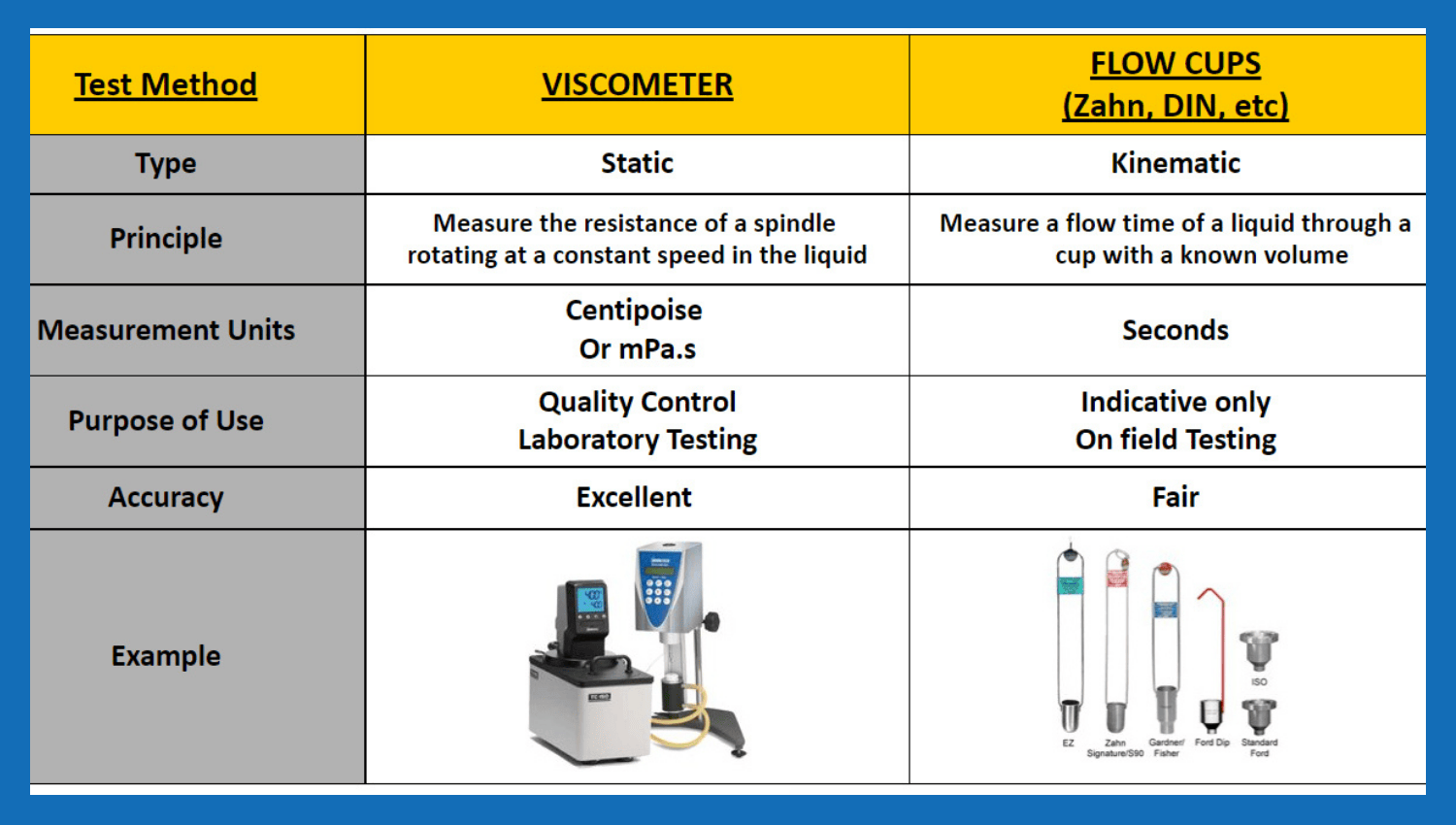
- Flow Cup: A Flow cup with a hole at the bottom is used to measure the paint viscosity. Pour the paint into Ford, Zahn, or DIN Cups and let it drip into a beaker slowly. Turn on the stopwatch to calculate flow time and repeat the process for average figures. Use the ElcoCalc app to measure viscosity in desired units.
- Stormer Viscometer: Stormer viscometer measures the viscosity following ATSMD562 standards. Its paddle rotates at 200 RPM after immersing in the sample. It provides the paint viscosity in KU and gram units on its LED display.
- Brookfield Viscometer: Unlike the Stomer viscometer, the Brookfield viscometer uses a spindle to measure the absolute paint viscosity. Fluid exerts a force on the spindle to rotate it. Later, it is examined to provide measurements in centipoise (cP) or mPa·s.
- Dip-Stick or Flow-Out Method: Dipstick is the most widely used method to measure viscosity at home. Dip a metal rod or stick in paint and pull it out straight. Observe the thickness from the way it drips back.
Common Viscosity Issues and How to Solve Them
Here are the common viscosity issues and ways to solve them:
- Paint Too Thick: Thick paint provides less working time and poor leveling. Add turpentine, acetone, naphtha, and lacquer thinners for easy application and a flawless finish.
- Paint Too Thin: Thin paints leave dripping marks, which ruin the overall look. Mix thickeners or apply coats with a few hours’ gap to set each paint layer.
- Inconsistent Viscosity: Paint with lumps provides an inconsistent, thick and thin coating. Use mechanical mixers or stir the paint well before application to minimize clumps.
About The Author
